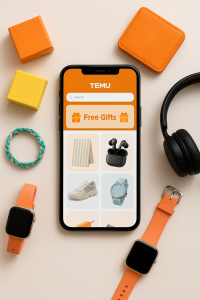
Marketplace discount coupons are real, legitimate, and originate from within the app itself — the problem is that almost everyone uses them incorrectly. This guide explains why. How the coupon works internallyThe different types that exist, the rules that void the discount at checkout, and the only honest way to know if you really saved money.
Quick Guide: How to get a coupon without wasting time
- 📲 The reliable source is the app itself, downloaded from Google Play or the App Store.
- 🎟️ The welcome coupon is the most generous — and it's only valid once, for a new account.
- 📏 Almost every coupon has minimum value, category and termThat's where he dies.
- 🧮 Compare the final total (including shipping and taxes), never the advertised percentage.
- 🚫 Coupons that arrive via shortened links, ask for APK files, or request SMS codes are scams.
Why does the store give coupons to just anyone?
A coupon is neither a gift nor a system flaw: it's the cheapest tool a business has for three things. It gets you to create an account (welcome coupon), it gets you to spend a little more than you normally would (minimum value coupon), and it gets you to come back (short-term coupon). Each of these goals has a corresponding coupon format, and recognizing the format tells you what the store wants from you.
This also explains why the best coupon you've ever gotten is usually the first one. Acquiring a new customer is very valuable; retaining an existing customer is worth much less. When the discount shrinks over time, it's not nitpicking—it's the internal benchmark changing.
The four types of coupons and what each one does.
1. Welcome coupon. The highest discount, valid only for new registrations and generally only for the first purchase. It usually comes with a minimum purchase amount and a short timeframe after registration.
2. Platform coupon. Distributed throughout the store in campaigns, applicable to a set of products or categories. This is what appears in the promotions tab and has the most hidden restrictions.
3. Seller's coupon. Issued by the seller of the product, and valid only in that store within the marketplace. In many cases it... accumulates With the platform's coupon — when combined, it's the best combination available.
4. Free shipping (which is a disguised coupon). Technically, it's a discount applied to shipping costs, with its own minimum purchase amount. It's worth treating it like a coupon when comparing prices, because for small purchases, shipping costs represent the largest portion of the total.
The rules that nobody reads and that void the discount.
- Minimum cart value. The most common rule. That's why there's always that one ten-real item left over in the cart "just to close the deal"—and that's exactly the desired effect.
- Specific category or seller. The coupon appears to be applied but disappears when you exchange the product. It's not a bug.
- Short shelf life. Many coupons are worth hours, not days. The counter is on the screen for a reason.
- One per account, one per order. Two coupons of the same type rarely add up. Platform coupons combined with seller coupons sometimes do.
- Application to the subtotal. The discount is usually applied to the product price before shipping and taxes. That's why the advertised percentage never matches the total amount deducted.
- Did you cancel part of your order? The coupon may expire. If the return brings the cart below the minimum, the discount disappears upon refund.
How to know if the discount is real?
This is the part that really saves you money, and it has nothing to do with finding more coupons.
Be wary of "from-to" prices. The crossed-out value is an anchor: it exists to make the current price seem like an opportunity. A "discount of 80%" only means something if that full price was ever actually charged.
Keep an eye on the price before you buy. If it's not urgent, bookmark the item and check again in a few days. Prices fluctuating upwards the day before a sale is common in any retail store.
Compare the final total, not the percentage. The number that matters is the one that comes out at the end: product, shipping, and import taxes, if any. Two ads with very different discounts can end up in the same place.
Compare the same item between different sellers. In marketplaces, the same product is often advertised by multiple stores, with different prices and shipping costs. That's where the savings that no coupon can provide are found.
Ask if you were going to buy that. A coupon that makes you buy something you didn't need isn't a discount: it's an expense. It seems obvious, and it's the most expensive mistake on the list.
Coupon, cashback, and in-app currency are not the same thing.
Coupon It's an immediate discount, applied in your cart. The money you don't spend stays with you.
Cashback It's a refund after the purchase is made, generally conditional on confirmation of the purchase and a deadline—in many cases, only after the exchange period has expired. It exists because a partner website received an affiliate commission for the sale and returns part of it to you. If the purchase is canceled, the commission disappears and the cashback is also lost.
Currency or points from the app It's credit that's only valid within the store. It's not cash: it has an expiration date, conversion rules that the store can change, and a limited redemption catalog. Treat it like loyalty, not savings.
Where to find coupons without falling for scams
The coupons that work are found within the official app and on the store's official channels. Content creators who share coupons usually earn a commission per sale—which is legitimate, and reputable creators declare this; the coupon remains valid for you in the same way.
Browser extensions that "search for coupons on their own" deserve a separate paragraph. They can do this because they see the pages you visit, and they earn money by replacing your affiliate link with theirs on the last click. It's not illegal, but it's a price in privacy that many people pay without knowing they're paying.
And the signs of fraud are always the same: shortened link in a messaging group, countdown timer, request to install a file outside the app store, form asking for card details to "validate" the coupon and, most seriously, request for... six-digit code that arrived via SMS — this code is the key to your account, and no legitimate user asks for it.
Common Care or Mistakes
- 🔴 Fill the cart just to reach the minimum score. You spent more to "save money".
- 🔴 Save the coupon for later. Short deadlines are the rule; expired coupons are not refundable.
- 🔴 Compare percentages instead of totals. Shipping costs and taxes completely change the outcome.
- 🔴 Create new accounts to reuse the welcome coupon. It's the fastest way to block the transaction, with funds available.
- 🔴 Enter data into a website that looks like the store's website. Check the address letter by letter before anything else.
- 🔴 Ignore the delivery deadline. For international purchases, the process is lengthy; no coupon will expedite customs.
Why is your coupon different from your friend's coupon?
You open the app, she opens hers, and the offers don't match. It's not luck or a mistake: a coupon on a marketplace is... customized, ...and what determines yours is your behavior within the app.
The signals most commonly used in this decision are familiar to any promotion system:
- If you are a new registration. New customers receive the most aggressive offer because they are the target of the acquisition campaign.
- How long has it been since you last bought something?. A customer who disappears often deserves a reactivation coupon; a customer who buys every week doesn't need an incentive to return.
- What was left in the cart. Abandoned item is the classic trigger. Many people report that the discount appeared right after they gave up — and it really did, it's the mechanism at work.
- Your spending range. The minimum coupon value is usually set slightly above your usual order value, to encourage shopping carts to increase.
- Device, app version, and region. Shipping and availability vary by address, and the offer reflects this.
Two practical consequences. First: comparing your coupon with someone else's is useless – the final total you pay is the real benchmark. Second: waiting a bit before finalizing your order, with the item in your cart, is a tactic that sometimes works precisely because the system is designed to react to hesitation.
Urgency, roulette, and the rest of scarcity engineering.
If a coupon were just a discount, it would be displayed in a simple list. It comes wrapped in a counter, a roulette wheel, and stock alerts because haste is part of the product: those who decide quickly compare less and give up less often.
The most common resources, and what each one does with its head:
- Countdown. It creates an artificial time limit to prevent price comparison. It's worth remembering that promotions are repeated, and that the item rarely disappears from the catalog when the counter reaches zero.
- “"Few units" and "so many people seeing it now.". They turn the decision into a dispute. Even when the information is true, its function is to speed you up.
- Roulette and collecting game. The prize that's almost won is the most effective of all: it keeps you coming back to the app, which is the real goal. Accumulated credit usually requires one last condition to become a discount.
- Price drop notification. Truly useful when you already wanted the product; an invitation to buy on impulse when you didn't.
- Coupon that appears at the exit. The offer that appears when you try to close the app exists because abandonment is the moment when the store is willing to pay more to keep you.
A simple antidote works for all of them: when the amount is significant, close the app and come back the next day. If the urge survives twenty-four hours, it was a purchase. If it didn't, the counter won—and you didn't lose anything.
What does the card and currency exchange add to the total?
When making international purchases, coupon discounts can be eroded by layers of information that appear after the shopping cart. It's important to know where these layers are applied.
The currency of the charge. When a purchase is charged in a foreign currency, the invoice amount is converted using the exchange rate used by the card issuer on the processing date, which is not the rate you saw on the day of purchase. Currency exchange transactions on the card are also subject to tax, charged directly to the invoice. As a result, the final amount in reais is usually slightly higher than what is displayed on the screen.
The installment plan. Paying in installments with "interest-free" payments offered by the store doesn't change the total amount. Installment plans offered by credit cards or digital wallets usually include interest, and in those cases, the coupon discount may be less than the cost of financing.
The refund. If you cancel or return a item, the money will be refunded using the exchange rate on the day of the refund, which is rarely the same as the purchase rate. Small differences, whether higher or lower, are normal and are not the store's fault.
The coupon applies to the subtotal. When the discount applies only to the products, shipping and taxes are factored in separately — which explains the difference between the advertised percentage and the actual savings on the bill.
The honest rule remains the same, applied in the right place: compare the value that appears in card statement, and not what appeared in the shop window.
Questions that arise when finalizing an order.
The amount charged to my card is different from the order amount. Is this a scam?
Almost never. Small differences in international purchases usually come from the exchange rate used for conversion and the tax on the currency exchange transaction. Large differences, or charges you don't recognize, are cases where you should dispute them with the issuer.
Is it better to pay with a digital wallet or with a card?
From a pricing perspective, it doesn't matter—the conversion rate is determined by whoever processes the payment. The digital wallet has the advantage of not exposing the card number to the store, which reduces the damage in case of a data breach.
Can I save the coupon for the big sale of the year?
Usually not: almost all coupons have a short expiration date, and some don't combine with seasonal promotions. If in doubt, the cart shows the result before you confirm — test with the coupon applied and without it.
I cancelled part of my order and lost the discount. Why?
Because the coupon depended on a minimum purchase amount. When items were removed, the cart fell below the limit and the condition was no longer met, so the discount was removed in the recalculation of the refund.
Is an influencer coupon different from an app coupon?
It's usually the same discount, with a code that identifies the origin of the sale to pay affiliate commission. This is legitimate and doesn't cost you anything extra — what matters is that the code comes from an official channel of the person, and not from a link received in a group.
Read also
- Free Items on TEMU: What's Available and What's the Trade-Off?
- Watching Free TV on Your Cell Phone: The Legal and the Risky Options
- Free Wi-Fi: 5 Apps That Show You Open Networks Near You
- Applications to Listen to Free Gospel Music Without Internet
- Photo Collage on Your Phone: 5 Free Apps with Ready-Made Templates
Common questions
Almost always for one of three reasons: the cart did not reach the minimum value, the product is not in the accepted category, or the coupon expired. The conditions are displayed on the coupon screen itself.
Two coupons of the same type, usually not. A seller's coupon combined with a platform coupon, in many cases, yes. The cart shows the result before you confirm.
No. It's the store's acquisition campaign and is validated against registration, device, and payment method. Trying to circumvent it usually costs you.
The discount is calculated based on a reference price set by the advertiser. Therefore, the reliable benchmark is the final total you will pay, compared to the same product from other sellers.
These are different things. A coupon is applied immediately; cashback is returned later, with a deadline and subject to purchase confirmation. For orders that can be canceled or returned, a coupon is more predictable.
Some advertise genuine promotions with affiliate links, which is legitimate. But it's also a preferred channel for scams. Never install anything through group links and never share codes received via SMS.
Conclusion
A coupon is a useful tool when it's used in a purchase that was already going to happen, but it's a trap when it's the coupon that creates the purchase. The difference between the two cases isn't the number of coupons you found, but rather two questions: was I going to buy this anyway, and was the final total actually lower than with the other options?
If the answer is yes to both, enjoy it guilt-free — the discount was paid for by the store's marketing budget, and that's a declared exchange. If the answer is no, the best coupon of the day is to close the app. Save this text to check the rules before your next purchase: it's there, in the shopping cart, that the discount usually slips away.