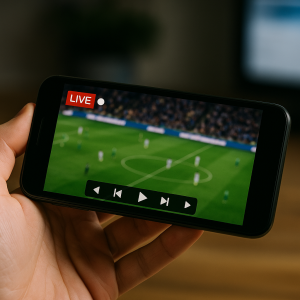
There's a legal and truly free way to watch movies on your phone, and it has a name: ad-supported streaming. Services like Pluto TV, Tubi, VIX, and Plex keep entire catalogs open because they license the titles and sell the commercial breaks—advertising isn't a tolerated nuisance, it's the business model. You pay with attention instead of a monthly fee.
Understanding this changes expectations and avoids two pitfalls. The first is thinking that there is a free catalog without ads: there isn't, and anyone who promises that is lying or distributing pirated content. The second is imagining that the movie release will appear there: it won't, because the exhibition window for these titles is expensive and is sold to those who charge a subscription.
In this article I explain how this free layer works internally, what's good about it, what it definitely isn't, and why downloading APKs outside the store to "watch everything for free" is a terrible idea even when it seems to work.
How free movies pay for themselves
The calculation is simple. The service buys the right to show a title from the studio for a specific period in its region. To recoup the cost, it inserts advertising blocks throughout the broadcast—generally much shorter than those on broadcast TV. The more people watch, the more the service earns and the more titles it can license. That's why the catalog changes from month to month: expiring contracts are not automatically renewed.
This same mechanism explains the limitations. A film recently released in theaters is tied to exclusive release windows. The hit series is the main selling point of subscriptions, so it rarely appears for free. And what is available in Brazil may not be in Portugal, or vice versa, because rights are negotiated country by country.
Free services worth installing
1. Pluto TV
It works like a TV: dozens of themed channels that play non-stop, plus an on-demand catalog. It doesn't require registration, which is rare and welcome. It's the best choice for those who don't want to choose—just open it and let it play. There are ads, and the service makes that clear.
2. Tubi
Large catalog, with partnerships from renowned studios, organized by category. You can use it without an account, but creating one saves you the point where you left off. It's also supported by advertising, with shorter blocks than those on television.
3. VIX
Strong in Latin American production, with plenty of content in Portuguese and Spanish, dubbed and subtitled. For those who prefer to watch without subtitles, it's usually the most comfortable option on the list.
4. Plex
It has a free layer of movies and channels, and a second feature that almost nobody uses: organizing your own video library, those files you already own legally. It's the most versatile of the group and the least intuitive.
5. Official YouTube channels
Distributors and studios publish full-length films for free on official channels, with advertisements. It's the most underrated option on the list. Just confirm that the channel is the official one—pirated copies also live there until they are removed.
What the free tier doesn't deliver
- Movie release. It's in an exclusive window and will only become available for free years later, if ever.
- The series of the moment. It's the main product for those who charge a subscription; it's not going to be free.
- Download to watch offline. Free services rarely offer this because the ad needs to be served during playback.
- Stable catalog. Titles come in and go out according to the contracts.
- Equal availability everywhere. Each country has its own list, due to regional rights.
Why downloading APKs from outside the app store is a bad deal.
There's always an app promising "all movies and all series, ad-free and free." It's worth understanding what's behind it. If the catalog includes what paid services charge to show, the app hasn't licensed anything—it's distributing copyrighted work, which is illegal in Brazil under the Copyright Law.
The practical problem comes along with this. Because these apps are outside of Google Play and the App Store, they don't undergo any security review, and it's common for them to request permissions that have nothing to do with video. What you gain in catalog revenue is paid for in aggressive advertising, sold data, and, quite frequently, malware. Add to that the fact that these services disappear overnight when they are taken down—and you're left with nothing.
Free with ads or subscription: how to decide
The right question isn't "which is better," but rather "what do I want to watch?" If you open the app without a title in mind, just wanting something on, the free tier works perfectly well and saves you a monthly subscription fee. If you have a list of specific titles—that series everyone's talking about, the award-winning movie of the year—no free service will meet your needs, and persisting will only lead to frustration.
A strategy that works well: keep the free services installed all year round and subscribe to a paid service only in the months when there's something you really want to watch, canceling afterwards. Subscriptions don't have a commitment period and switching back is easy. This usually costs less than keeping three paid services unused.
It's also worth mentioning two free sources that almost no one considers: the digital over-the-air television, which streams movies with better quality than many people imagine and doesn't consume any data, and the public and university libraries, which in some cities provide access to movie platforms with a library card.

Tips for making the most of it
- Install two or three services. The catalogs hardly overlap; together, they cover a lot.
- Reduce the quality on 4G. One hour of high-definition video takes up several gigabytes.
- Use the favorites list. Since the catalog changes, marking what you want to see prevents you from missing the title.
- Mirror to the TV via Chromecast or AirPlay whenever you want a big screen.
- Activate parental controls. If there are children at home: the catalogs mix classifications.
Sign up and cancel without hassle.
The strategy of signing up for a month and then canceling only works if the second part is done correctly. And that's where many people slip up, because the cancellation process doesn't always go as planned.
Start with the detail that most often leads to incorrect charges: Uninstalling the app doesn't cancel anything.. The subscription is a contract with automatic renewal and continues to run even if the app is deleted, the device is changed, and the password is forgotten.
Where to cancel depends on where you signed up:
- Did you sign within the app, on your cell phone? Billing is managed by the store — Google Play or the App Store. Cancellation is done through the subscriptions section of your account on the store website, not with the streaming service.
- Did you sign up through the service's website? So the button is located in the account area. The store has nothing to do with this charge.
- Did you sign up along with the operator's bill or as part of a bundled package? In this case, the cancellation process goes through the billing company, and it's usually the most complicated of the three. Keep the protocol number.
Three pieces of information to avoid surprises. First: when you cancel, you generally retain access until the end of the paid period—you don't need to cancel on the last day. Second: the free trial almost always requires a registered payment method and automatically becomes a charge; note the renewal date on your calendar as soon as you activate it. Third: the Consumer Protection Code provides for the right of withdrawal within seven days for contracts made outside of a commercial establishment, which includes online purchases—if you signed up by mistake, this is the way to proceed.
And it's worth checking the price again. Services adjust plans, and the amount you paid last year may not be the same when you resume. Before impulsively resubscribing, check how much it costs now.
Player features that almost nobody uses.
Much of what enhances the experience is hidden behind a couple of taps on the video screen. It's worth exploring, because none of these features cost anything.
Floating window. The video continues playing in a small square on top of other apps, and you can reply to messages without pausing the movie. On Android and iPhone, this feature is system-specific, and some services allow it while others block it.
Touch blocking. It locks the screen during playback so that bumping into something won't pause or skip fifteen minutes of the story. It's the most useful feature for those watching while lying down or on public transport.
Playback speed. Common in documentaries and interviews. In fiction films, it hinders more than it helps—the acting and the silence are part of the rhythm.
Sleep timer. It pauses playback after a set time. Those who fall asleep watching it save battery and data usage this way.
Continue on another device. If you use an account, the point where you left off travels between your cell phone, browser, and television. That's the main practical reason to sign up for a free service.
Skip opening and credits. Not all services have them, and it depends on whether the title comes with those markings. In a long series, it makes a real difference.
Finally, look for the option to Turn off autoplay previews. On the home screen. Those videos that play automatically while you decide what to watch consume data, battery, and processing power — and nobody misses them.
Space, cache, and why the app takes up more weight on your phone.
You installed an 80 MB application, and three months later it's taking up almost 1 GB. It's not a virus and it's not a defect: it's cache.
To avoid having to reload the same things every time, the app saves covers, thumbnails, preview snippets, and previously played video clips on the device. This makes browsing faster and saves data, but it grows uncontrollably if nothing is done.
The cleanup is painless and is located in the system settings, in the application storage section. There are two options there that look the same but are not: Clear cache It only deletes temporary files and doesn't touch any of your own files; clear data This restores the app to its newly installed state, disconnecting the account and clearing preferences. When in doubt, use the first option.
It's also worth knowing that a full storage space slows down the entire phone, including video playback, because the system loses space to the temporary files it needs. Keeping about ten percent of the space free is a rough rule that works well.
And since we're talking about space: two or three free services installed cover the available catalog very well. The fourth and fifth usually remain unopened for months, taking up space, running in the background, and sending notifications.
Read also
- Watch Live TV on Your Cell Phone: 6 Free and Subscription-Based Apps
- Download Asian Movies on Your Phone: Apps and Legal Ways
- Free Movies and TV Shows: 8 Licensed Apps and Their Catalogues
- 7 Free Streamings to Watch Movies, Programs and Series
- K-Drama on Mobile: Where to Watch for Free and What's Missing
Frequently asked questions from those watching on their mobile phones.
Does watching movies on your phone drain the battery quickly?
It consumes a lot of power, and the biggest consumer is the screen, not the video. Reducing the brightness, using headphones instead of speakers, and setting a lower resolution significantly increases playback time.
Can I watch it with the screen off, just listening?
In video services, this almost never happens: playback stops when the screen goes black because the ad needs to be displayed. Some apps only offer this in paid plans.
Do I need an account to use the free services?
In most cases, no. The account serves to save the point where you left off and synchronize between devices. Without it, you deliver less data and lose continuity.
Is it worth watching in 4K on a mobile phone?
No. On a small screen, the difference compared to high definition is practically invisible at normal viewing distances, and data consumption increases several times over. Save 4K for television.
How do I know how much data I used while watching?
Both Android and iPhone show usage per app in network settings, with filtering by time period. It's the most reliable way to find out where your data allowance has gone.
Is too much advertising in an app a sign of a problem?
Commercial breaks during movies are normal—they're part of the service's revenue. What's not normal is full-screen ads outside of playback, redirection to other websites, and persistent notification requests. This combination is a sign of an app of dubious origin.
Conclusion
You can watch a lot of movies for free, completely legally — as long as your expectations are right. You'll find classics, independent films, old studio catalogs, documentaries, and themed channels running all day long. And there will be ads, because it's the advertising that pays for the licensing.
What you won't get is the latest release or the series everyone's talking about. Anyone promising that for free is offering piracy with the risk of embedded malware. Install two or three official free services, accept the breaks, and enjoy: the legal catalog is already large enough for many nights.